Optimize Asset Weights: The Comprehensive PDF Compression Guide
High-resolution images, duplicated fonts, and leftover edit history are what actually bloat a PDF. Learn how compression targets each of these without touching your text quality.
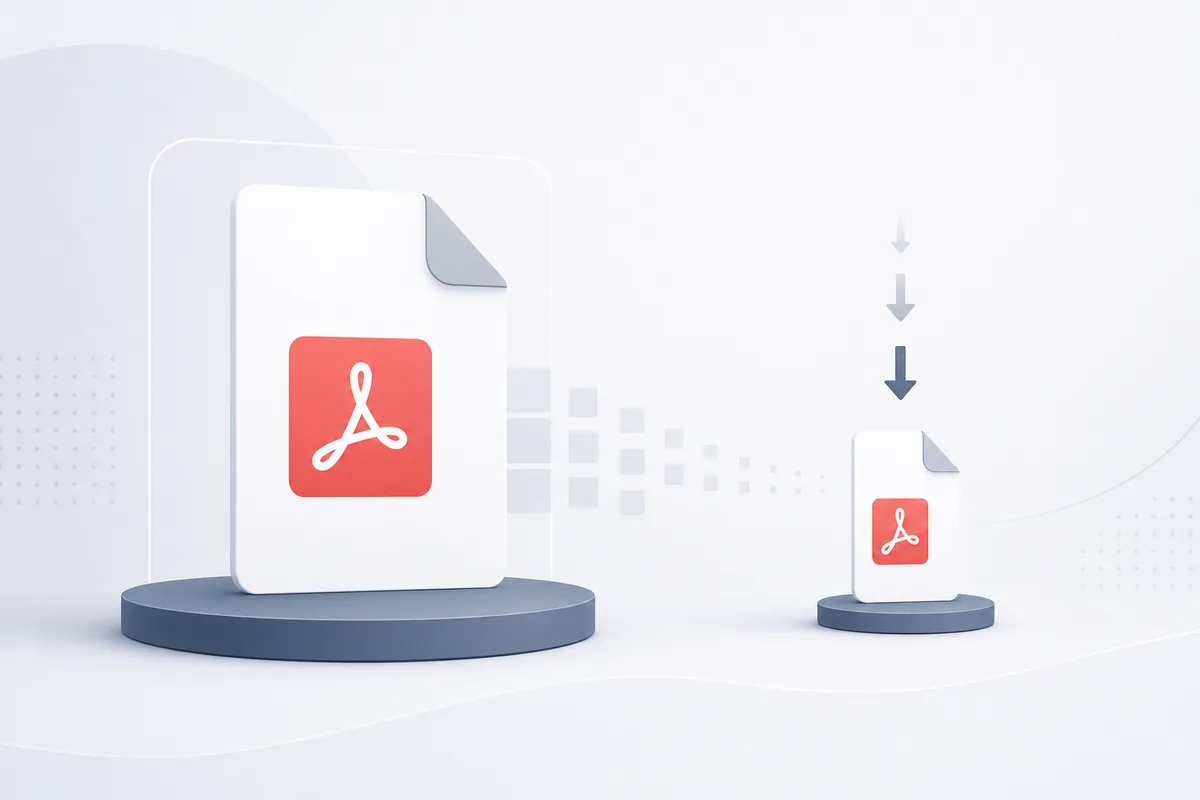
Trying to email a report only to have it bounced back for being too large is a familiar problem. PDFs bloat for a few concrete reasons: uncompressed or high-resolution images, duplicated font data, and leftover objects from repeated edits. Understanding what's actually taking up space is the fastest way to shrink a file without wrecking it.
Why PDFs Get Large
Most of the weight in an oversized PDF comes from images. A page scanned at 600 DPI and embedded at full resolution can be several megabytes by itself — for on-screen reading, that's massive overkill. The rest usually comes from font data (a document that embeds five style variants of the same typeface stores that data five times), and from incremental updates: many PDF editors don't rewrite the whole file on save, they append changes, so a file that's been edited a dozen times can be carrying around old, unreferenced versions of objects nobody uses anymore.
How Compression Actually Works
- Image downsampling — images embedded above the resolution needed for their eventual output are resampled down (e.g. to 150 DPI for on-screen viewing, 300 DPI if the file still needs to print well) and re-encoded, usually with JPEG compression for photos.
- Font subsetting — instead of embedding a font's entire character set, only the glyphs actually used in the document are kept.
- Object stream compression — PDF supports storing multiple small objects (like font metadata) inside a single compressed stream rather than as separate objects, cutting overhead.
- Garbage collection — rewriting the file's cross-reference table so it only lists objects that are actually reachable from a page, dropping orphaned data left over from edit history.
None of this touches the text itself — text in a PDF is stored as vector outlines or references to font glyphs, not pixels, so compression that only targets images and duplicate data won't blur your text.
Best Practices
1. Match resolution to the actual use case
There's no universal 'right' compression level. 150 DPI is plenty for a document that's read on a screen. If a file is going to print, keep image resolution closer to 300 DPI so print detail doesn't come out soft — over-compressing print-bound documents is the most common way this goes wrong.
2. Deduplicate fonts before compressing
If a document has been assembled from multiple source files (e.g. after a merge), it can end up with several separate embedded copies of the same font. A good compressor merges these into a single shared reference automatically — it's worth checking the output file's size against the input to confirm it actually happened.
3. Strip incremental-update leftovers
If a file has been through several rounds of manual edits, it may be carrying invisible prior versions of pages or objects. A full resave — not just a compression pass — clears these out.
4. Check text and image quality after compressing
Always open the output and zoom in on both text and any photos or logos before sending it out. If images look muddy, the resolution target was set too low for that content.
5. Know when compression won't help
If a PDF is encrypted, some compressors can't touch the underlying streams without first removing the encryption — see our guide on removing PDF passwords if a locked file isn't shrinking as expected.
Common Tasks
Shrinking a report for email
- Upload the file to a compression tool.
- Choose a target profile — screen-quality is fine for most email use.
- Download the result and confirm the file size against your mail provider's attachment limit (see our guide on compressing PDFs for email if you're still over the cap).
Compressing scanned documents
Scans are usually the worst offenders because they're stored as full-page images rather than text. Downsampling helps a lot here, but running OCR first (turning the scan into searchable text plus a lighter background image) often shrinks the file even further while making it usable.
Troubleshooting
Text looks blurry after compression. This means image downsampling was applied too aggressively, or — less commonly — the tool converted text-based pages into flattened images. Re-run at a higher DPI target and confirm text is still selectable, not rasterized.
File size barely changes. The file is likely encrypted, already heavily compressed, or dominated by content that doesn't compress well (like already-compressed JPEGs). Check whether it's password-protected first.
Links or bookmarks disappear. This shouldn't happen with a well-built compressor — object stream compression and garbage collection only touch unreferenced data. If it happens, the tool is doing something more aggressive than compression and is worth avoiding for anything with internal navigation.
Conclusion
Compression is really just image downsampling, font deduplication, and cleanup of leftover edit history — no mystery techniques, no risk to your actual text. Match your resolution target to how the file will be used, check the result before sending it, and you'll get meaningfully smaller files without a quality trade-off you'll notice.